Somewhat spur of the moment, we decided to head down to Modena (accent after the first syllable, I just learned) with a couple of friends and do some Ferrari-driving and balsamic vinegar tasting. We hoped to squeeze in some wine tasting as well and were on the wait list for a highly touted restaurant, but neither of those things panned out. I can't be too bummed about it, because it ended up being a really fun day.
We hit the road shortly after 0800 and started heading South-ish. With good conversation and little traffic, the miles flew by. I suspect they went even faster because we made the other couple take charge of driving. Hah! Don't think we're total responsibility abstainers though, because we did chip in for tolls, which I think came out to something like 18 Euro for the round trip. It took just a little more than an hour and a half to get to Pit Lane, just south of Modena in the town of Maranello. I'd sent an inquiry the night before, but they were closed so we weren't sure if we'd be able to actually drive the cars or not, pending availability. We found ample parking right out front, and were promptly swept the opposite direction from a sweet-talking competitor. Because he was standing pretty much directly in front of Pit Lane, we assumed he worked there, and it took a few minutes before we realized he didn't. However, he assured us there was a bar and the two ladies could wait while the men did the driving. You have a bar, okay, I'm sold! Turns out, there was no bar, but there was a least a shaded outdoor seating area (and coffee vending machine) where I could wait.


Pricing for the test drive started at 70 euro for ten minutes and increased based on the model of car you chose and the length of driving time desired. Having little desire to drive one of those machines and no clue about the difference between the types of Ferrari available, I left all the deciding up to Tony, who ultimately chose to drive a California for 20 minutes. His pal hopped in the back seat and their co-pilot - after a brief demonstration of the paddle shifters - took the passenger side. They started up the video camera and took off. About half an hour later, they came back with big goofy grins on their faces, so I think they deemed it a successful outing. It must have been, because they sprung for a cd of the video and photos to take home. As it turns out, all of the driving was on streets and they had to contend with normal traffic, so they didn't get to go too terribly fast. Only 150 or 170 kph or something like that...(rolls eyes) And the route happened to go by a dog food factory, so I'm sure that was an awesome smell (carne for cani, said the co-pilot). But all-in-all, the gents seemed satisfied so it was a good choice. I do think we're going to have to make a return trip so they can test drive Lamborghinis later. You know, for scientific comparison.

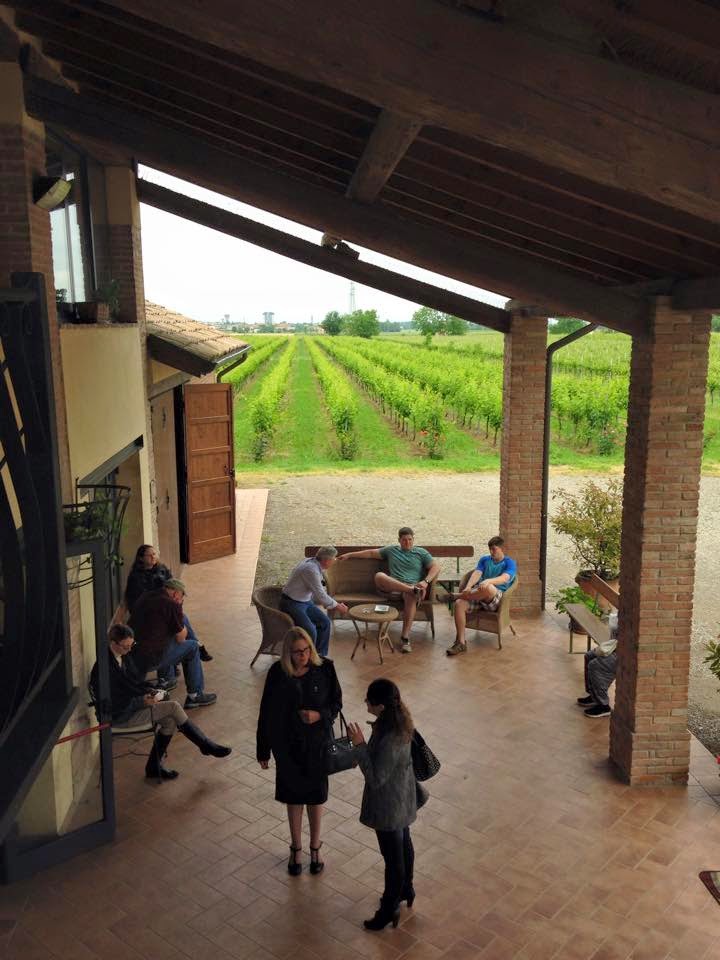
We sat at a table for four, in a large covered patio surrounded by wisteria and I think boxwoods. Off to the side was a little swing (in the smoking area) and we had a nice view of a big backyard. The weather was perfect - sunny and clear, not too hot, with a slight breeze, and I was so happy we got to enjoy the meal outdoors. In short order, the waiter brought out a bottle of something white and bubbly, produced and bottled on site. To go with it, our first course was a delicate pasta stuffed with ricotta and spinach, which we were meant to drizzle with balsamic vinegar and Parmigiano cheese. We didn't fight over the last few pieces, but only because we knew there were more presumably equally delicious dishes coming. We switched to Lambrusco and had a very nice pasta with ragu for the second course. The main course was actually a platter containing balsamic chicken, guinea fowl with prosciutto, balsamic pickled onions, and fritatta (also drizzled with balsamic vinegar). We polished off another half bottle of Lambrusco, and then for dessert we had gelato drizzled with more balsamic vinegar. I couldn't tell if the gelato had a lemon flavor to it, or if the acidity in the vinegar lent a citrus flair to it, but either way it was delicious. Next our waiter brought out coffee and grappa - four kinds of grappa, to be exact. A traditional, a Lambrusco, a walnut, and a limoncino. I tasted the walnut and found it to taste like, well, walnut, with a decidedly coffee-like finish. It was fine, but I'm glad I just had a little sip as a little goes a long way. I had a shot of the limoncino, which really hit the spot after eating such a rich meal. I didn't try the Lambrusco grappa, but as we were walking away Tony left his shot on the table so I went ahead and downed it. Waste not, want not, right?
After the leisurely lunch, we joined a British couple on a tour of the acetaia. First we went to the large aging room and got an explanation of the process, and our eyes started watering from the acrid nature of the air. I noticed a confessional near the door and asked about it. Inside the confessional was a small flask and bottle, for the local priest. I guess that's one way to tithe! Next we went into the small aging room and learned a little about the Pedroni family history. They are in their 7th generation of making balsamic vinegar, though the family name can be traced much farther back. I asked about the family crest and learned it was created in the 1600s, when Leopold I (of Austria) made the family part of the nobility. Traditional Modena balsamic vinegar must age at least 12 years before it can be sold, and the Pedroni acetaia had 12-, 20-, and 40-year old vinegars for sale. The oldest cask in the small aging area dated back to the 1800s! Most of their aging is done in barrels of chestnut, though they also use mulberry, juniper, cherry and I think a few other varieties.
After the tour, we went back to the greeting area/lobby for a vinegar tasting. First we tasted some balsamic-pear jam. I could probably eat half a jar of that stuff with a spoon and feel no regrets. Then we tasted their daily balsamic, the IGP which I think I preferred over the 12-year and 20-year stuff. Sadly, we did not taste the 40-year old vinegar. The family sells their wine and grappa (including a cherry grappa we didn't get to sample) along with the vinegar products, and some local honey. We paid 35 euro per person for the meal, tour, and tasting, and it was definitely worth it. You can learn more about the business and products here, and there's even a portion of the website dedicated to recipes: http://www.
 |
| Photo from http://www.acetaiapedroni.it |
After lunch we headed to the Vinoteca Modena, recommended by our waiter Lucas. He told us it would be closed but if we knocked and said he sent us, they would open up for us. However, when we got there it looked really really closed, so we decided to head on home.
And by home, I mean we went to the neighborhood gelateria by our friends' house, and then walked across the street to the local butcher and picked up steaks and salsiccia. Then we went to THEIR home and had dinner and played a few games of LRC and dice bowling before heading to our house. For a trip we totally winged, it turned out beautifully.